
Licensed pest control
Stink Bug Control Services
Stink bug control means sealing the gaps the bugs use and treating outside walls in late summer, before they move in for winter. A one-time pest control visit runs $300 to $550, and quarterly visits cost $100 to $300 each. Spraying inside does almost nothing, since the bugs are already hiding in walls and attics. And they don’t bite or breed indoors. Tell us when and where you see them, and we’ll connect you with a licensed company near you for a free quote.
- Licensed & insured techs
- Free, no-pressure quotes
- Homes, apartments and businesses
What Do Stink Bugs Look Like?
The brown marmorated stink bug is the one that piles into houses. Adults are about 5/8 inch long, mottled brown and shaped like a shield, with light bands on the antennae and alternating light and dark bands along the edge of the body.
Penn State Extension records the first one collected in Allentown, Pennsylvania, in 1998, and the species has since spread across most of the country. Native brown stink bugs look similar but lack the banded antennae and rarely come indoors.
Crush one and you’ll know it. The smell lingers in fabric and on your fingers.
Signs of Stink Bugs in Your House
Clusters on Sunny Walls in Fall
Dozens of bugs on south and west facing siding, window frames or the garage door in September and October.
Slow Bugs at Windows in Winter
Single bugs crawling on windows or flying clumsily into lamps on warm winter days, after leaving their hiding spots in the walls.
Bugs in the Attic
Groups packed behind insulation, under boxes or around attic vents, where they wait out the cold.
A Sharp Smell When Disturbed
An odd, herbal odor near curtains or a light fixture where a bug got squeezed or knocked down.
Stink Bug Types You Might See at Home
Only one stink bug species invades homes in big numbers. A couple of look-alikes get blamed for it in fall.
| Bug | Where in Our States | What It Means for You |
|---|---|---|
| Brown marmorated stink bug | Worst in Pennsylvania, New York, Ohio and North Carolina, spreading elsewhere | The real home invader. Exclusion and late summer exterior treatment control it. |
| Native brown and green stink bugs | All 10 states | Feed on garden plants and crops and seldom move indoors. No house treatment needed. |
| Western conifer seed bug | Common in the Northeast and Midwest | A similar-looking bug that also comes in for winter. The same sealing and vacuum steps handle it. |
How Pros Handle Stink Bugs
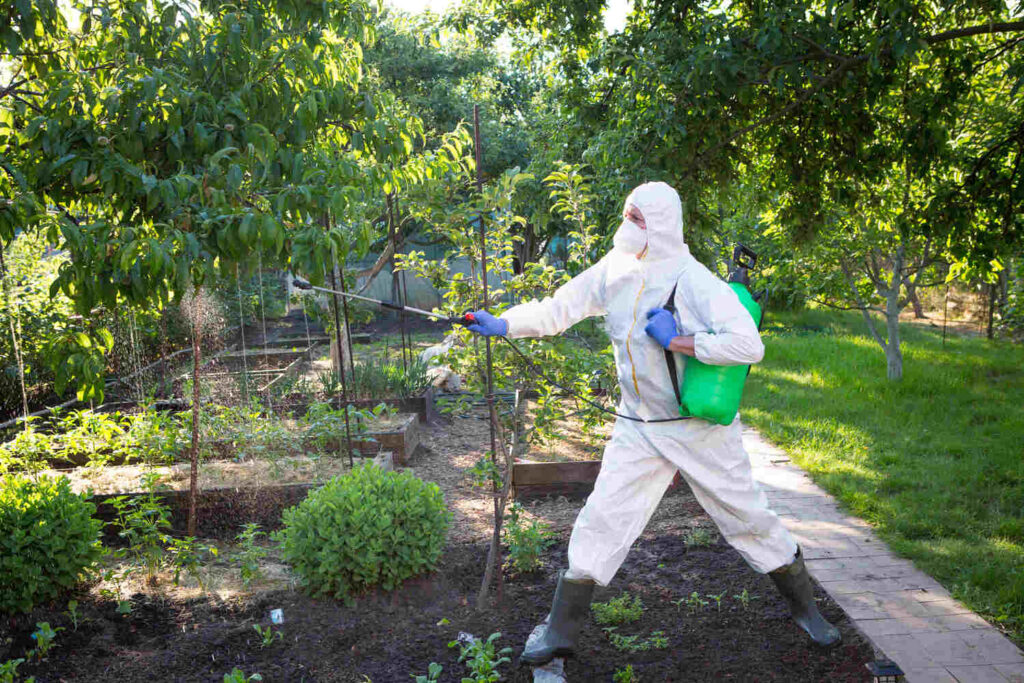
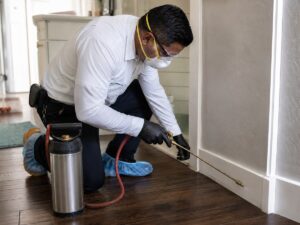
Stink bug treatment happens outside the house, before the bugs move in. A tech applies a residual insecticide to the south and west walls, eaves, window frames and soffits in late summer, just before the fall gathering starts, so bugs landing there die before they find a gap.
Indoor spraying is pointless. Penn State warns that bugs killed inside wall voids can draw carpet beetles that feed on the dead ones, which trades one pest for another. Sealing gaps does more good than any spray.
What Happens on a Stink Bug Job
- Inspection
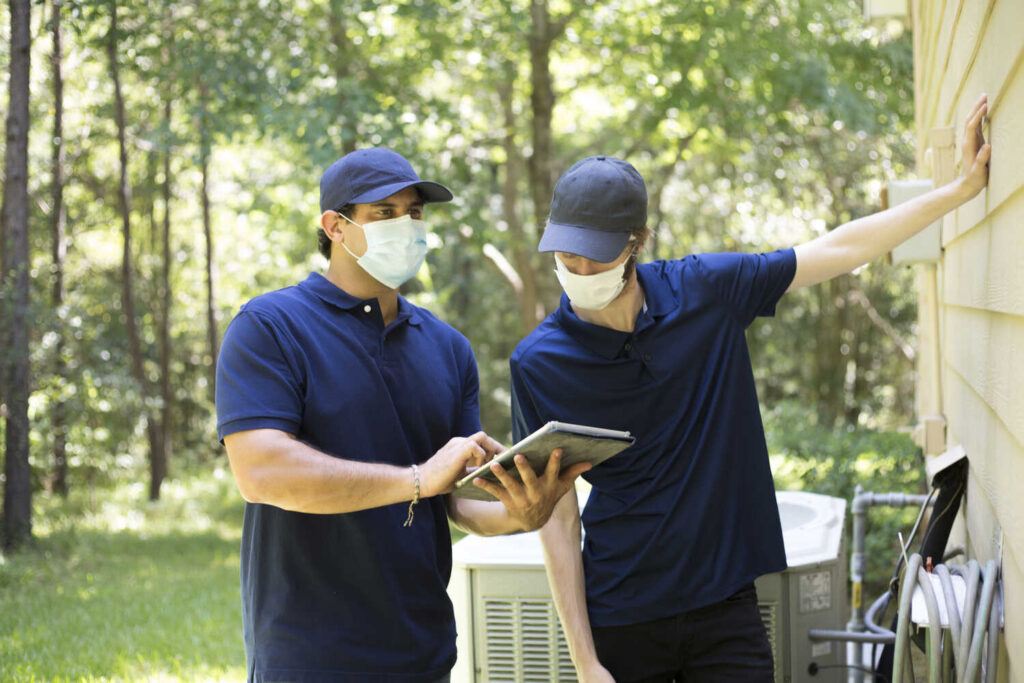
- The tech checks siding, soffits, attic vents, window and door frames and utility openings for the gaps the bugs squeeze through.
- Exclusion Work
- Gaps get caulk, weatherstripping, foam or screen. Some companies quote this as a separate line, so ask.
- Exterior Treatment
- A residual product goes on the sunny walls and eaves in late summer or early fall, timed before the bugs gather.
- Seasonal Follow-up
- A quarterly plan repeats the exterior treatment the next year, since a fresh wave of bugs shows up every fall.
How Much Does Stink Bug Control Cost?
Stink bug control costs about the same as a general pest visit, $300 to $550 for a one-time service on a 1,500 square foot home. Quarterly visits run $100 to $300 each. Home size, how much sealing the house needs and the timing of your call all change the price.
Angi’s pest control cost guide doesn’t price stink bugs separately, so these are its general one-time visit and quarterly plan prices. Book in August, because a quote in November comes after the bugs are already inside.
| Job | Typical price |
|---|---|
| Inspection | $125 to $450, some companies fold it into the first visit |
| One-time visit | $300 to $550, priced on a 1,500 square foot house |
| Initial visit on a plan | $150 to $300 |
| Quarterly visit | $100 to $300 each |
| National average per visit | About $172 |
Can You Handle Stink Bugs Yourself?
DIY stink bug control works for most homes because the job is mostly sealing and cleanup. Caulk gaps around windows, pipes and siding, add weatherstripping to doors and patch torn screens in summer. Inside, vacuum the bugs and then freeze or throw out the bag right away. NC State notes some people keep a cheap handheld vacuum just for stink bugs, since the smell clings to the machine.
Call a pro for a house with hundreds of bugs every fall, gaps up high on the siding or soffits you can’t reach, or an attic full of them. The exterior treatment needs good timing and a ladder.
So: a few bugs at the windows, vacuum and caulk. Clusters covering the siding each September, book a pro in late summer.
How to Keep Stink Bugs Out of Your Home
- Caulk gaps around window frames, door trim and siding before September.
- Seal openings around pipes, cables, outdoor faucets and dryer vents.
- Put fine screen over attic and soffit vents and repair torn window screens.
- Replace worn door sweeps and weatherstripping on doors to the outside.
- Fix or remove window air conditioners before fall, since bugs crawl in around them.
Stink Bug Control in Your State
Stink bug pressure runs much heavier in the eastern states we cover than in the South and West.
How It Works
Tell Us The Problem
Tell us when the stink bugs show up, where they gather and your ZIP.
Get Matched With A Local Pro
We find a licensed pest company near you that handles stink bugs.
Book Your Treatment
The company quotes the sealing and exterior treatment, and you set the date.
Stink Bug Control FAQs
Have a stink bug question we didn’t cover? Ask it through the form and include your state.
Do stink bugs bite or hurt pets?
No. Stink bugs have mouthparts made for sucking plant juices, and they don’t bite people or pets. They don’t damage furniture or wiring either.
The worst they do indoors is smell when crushed.
Do stink bugs lay eggs in the house?
No. Penn State Extension says stink bugs don’t reproduce indoors. The ones you see in winter are adults that came in during the fall and will try to leave in spring.
So the number inside doesn’t grow on its own over winter.
Why are there suddenly so many stink bugs in my house?
Stink bugs look for winter shelter in September and October and gather on warm, sunny walls. Any gap around a window, vent or pipe leads them into walls and attics.
On warm winter days they wake up and crawl out into living spaces.
When should I book stink bug treatment?
Book for late summer, August into early September, before the bugs start gathering. A treatment after they’re inside the walls does little.
A one-time visit costs $300 to $550, or quarterly visits run $100 to $300 each.
What’s the right way to vacuum stink bugs?
Use a handheld or shop vacuum, then freeze or toss the bag right after. The smell can cling to a regular household vacuum.
Don’t crush them, and skip the indoor spray entirely.
Get a Free Stink Bug Control Quote
Send us the form with where the stink bugs gather and your ZIP. A licensed company in your area sends a price for sealing and treatment, with nothing to sign.
Along with stink bug work, the companies we match you with handle Ant Control, Spider Control and Wasp & Hornet Control, plus every other pest control service we list.