Licensed pest control
Wasp & Hornet Control Services
Wasp nest removal means killing the whole colony and then taking the nest down, and it costs $300 to $700 for most jobs. A small paper wasp nest under the eaves can be $150, while a yellow jacket nest inside a wall runs up to $1,000 or more. The species and where the nest is decide the price and the risk. Tell us what you’re seeing and we’ll connect you with a licensed company near you for a free quote. Honey bees are a different call, covered below.
- Licensed & insured techs
- Free, no-pressure quotes
- Homes, apartments and businesses
What Do Wasps and Hornets Look Like?
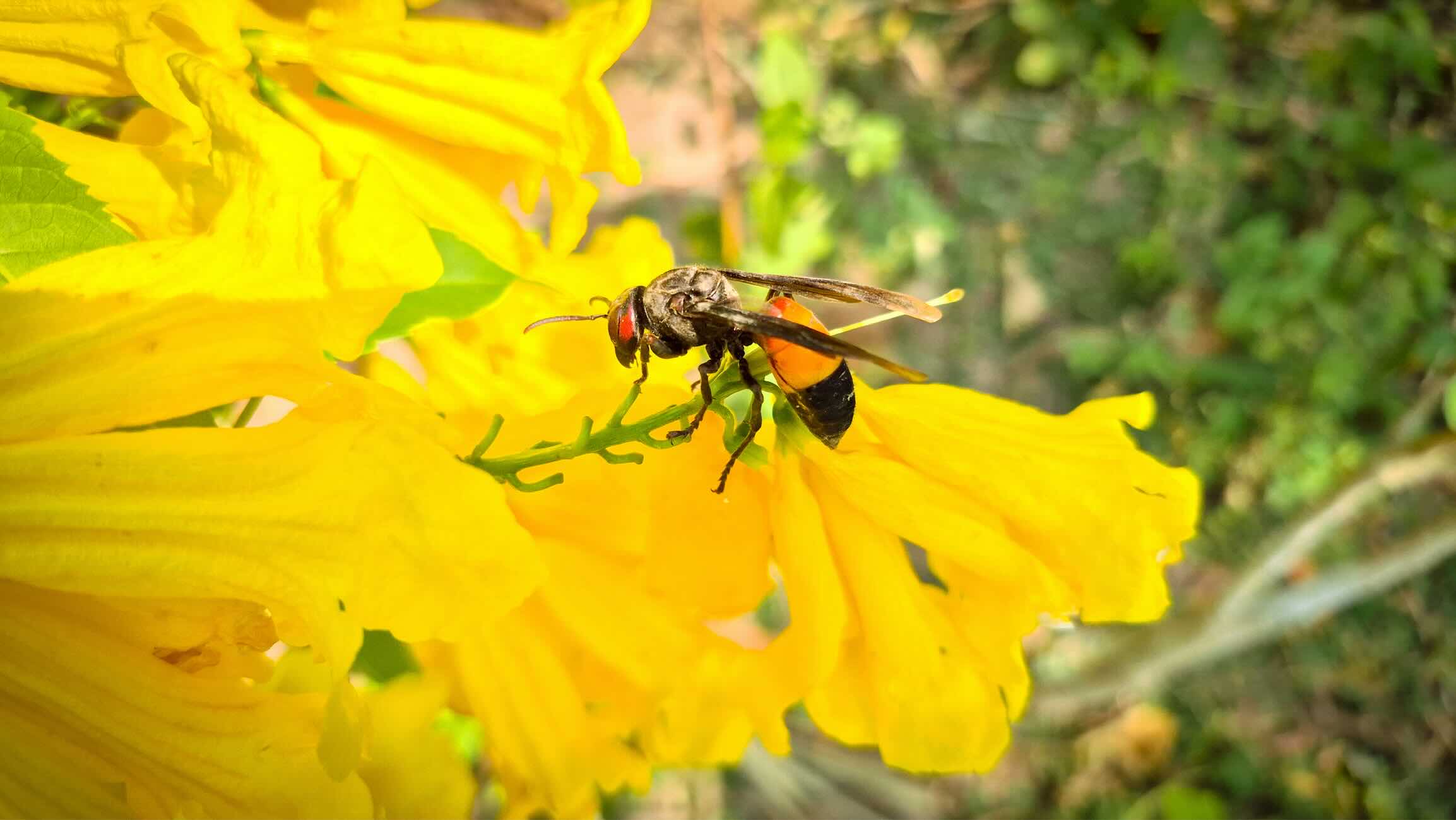
Yellow jackets are about half an inch long, with hard, shiny, nearly hairless bodies banded black and yellow. Paper wasps are longer and thinner, brown or reddish with yellow marks, and they fly with their back legs hanging down. Bald-faced hornets are black and white, with a white face, and despite the name they’re a kind of yellow jacket.
The European hornet is the big one, up to an inch long, with a reddish brown head and thorax and a mostly yellow abdomen. Honey bees look fuzzy and duller by comparison, with flat, hairy hind legs that carry pollen.
Not sure which wasp you have? Look at the nest. An open, umbrella-shaped comb means paper wasps, a gray paper ball means hornets, and a hole in the ground or wall with steady traffic means yellow jackets.
Signs of a Wasp Nest on Your Property
Steady Traffic at One Hole
Wasps flying in and out of a gap in siding, a vent or a hole in the lawn every few seconds. That’s a yellow jacket entrance.
Gray Paper Ball in a Tree
A football-sized or larger gray nest high in a tree, shrub or under an overhang, built by bald-faced hornets.
Open Comb Under the Eaves
A small, uncovered comb hanging by a stalk from eaves, porch ceilings or a grill lid, with paper wasps on top.
Chewing Sounds or a Wet Spot
A crackling noise inside a wall or a damp, soft patch on drywall or a ceiling. Yellow jackets enlarging a nest can chew right through.
Wasp and Hornet Species in US Homes
Four wasps cause most stings and nest calls in the states we cover. Each one nests in a different spot, which changes how the job gets done.
| Wasp | Where It Nests | What It Means for You |
|---|---|---|
| Yellow jackets | Ground holes, mulch piles and wall voids, in all 10 states we serve | The most aggressive of the group. Colonies reach 4,000 to 5,000 workers by late summer and defend the nest hard. |
| Paper wasps | Eaves, porch ceilings, shutters and play sets, nationwide | Small nests and a mild temper, so they’re the cheapest and safest to remove. They mostly sting when the nest gets bumped. |
| Bald-faced hornets | Gray, egg-shaped paper nests in trees, shrubs and roof overhangs | Big colonies that rush out when the nest gets hit. Leave high nests in trees alone unless people walk under them. |
| European hornets | Hollow trees and house wall voids, mostly in the East and Midwest | Fly at night and bang into porch lights. They also strip bark off lilacs. |
How Wasp Nest Removal Works
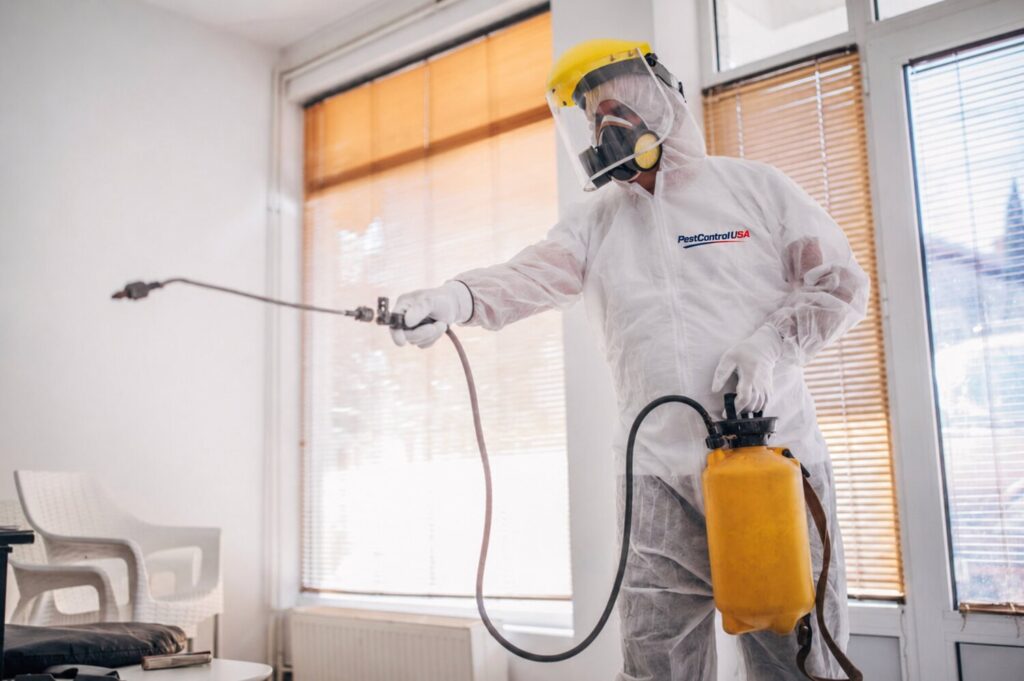
Wasp nest removal starts with killing the colony inside the nest, not swatting the ones flying around. For ground and wall nests, a tech puffs insecticidal dust into the entrance, and the returning wasps track it deep into the nest. Exposed nests in trees or eaves get a direct spray, then come down once the activity stops.
Timing matters. Pros work early morning or after dark, when the whole colony is home and too cool and slow to fight back.
What Happens on a Wasp and Hornet Job
- Identify the Wasp
- The tech confirms it’s wasps and not honey bees, finds every entrance and checks how far a wall nest reaches inside.
- Treat the Nest
- Dust goes into ground and wall openings, while open nests get sprayed. The tech wears a full bee suit and veil.
- Wait, Then Remove
- Outdoor nests come down after the colony dies, usually within a day. Wall nests often stay in place unless they’re causing damage.
- Seal and Check
- The tech seals the entry hole only after traffic stops, then rechecks if any wasps still show up a few days later.
How Much Does Wasp Nest Removal Cost?
Wasp nest removal costs $300 to $700 on average, with a $525 national average. The species and the nest location set the price, so a paper wasp nest on the porch costs a fraction of a yellow jacket nest in a wall or attic.
Prices come out of HomeGuide’s wasp and hornet nest removal guide. Tell the company the nest location and size up front, because a quote over the phone for an eave nest won’t cover a wall job.
| Job | Typical price |
|---|---|
| Paper wasp nest | $150 to $350 |
| Hornet nest | $300 to $475, bald-faced hornets $500 to $800 |
| Yellow jacket nest | $600 to $1,200 |
| Nest inside a wall | $500 to $1,000, plus drywall repair if the nest gets cut out |
| Honey bee removal or relocation | $125 to $1,000, more for an established colony in a wall |
Can You Remove a Wasp Nest Yourself?
Wasp nests the size of a golf ball, early in the season, are fair game for DIY. Wait until after dark, use a red flashlight, spray the nest with a wasp aerosol that shoots 15 to 20 feet, and walk away. Knock it down the next day. Ground nests work the same way with an insecticidal dust puffed into the hole. UC IPM still warns that stings happen even at night, so wear long sleeves, gloves and eye protection.
Call a pro for any nest in a wall, attic or chimney, any yellow jacket nest after mid-summer, and anything you’d need a ladder to reach. Never plug a wall nest hole. Ohio State Extension says trapped wasps will find another way out, often into your living room. Anyone allergic to stings shouldn’t try DIY at all.
So: small paper wasp nest on the porch, do it at night yourself. Wall nests, big hornet nests or bees, get help.
How to Keep Wasps From Nesting Near Your Home
- Check eaves, shutters and play sets in April for walnut-sized nests and knock them down.
- Caulk gaps in siding and screen attic vents before queens start nests in spring.
- Fill old rodent burrows in the lawn, a favorite yellow jacket nest site.
- Keep trash and recycling lids shut in late summer, when yellow jackets switch to sweets.
- Pick up fallen fruit under trees, which draws yellow jackets and European hornets.
Wasp and Hornet Control in Your State
Wasp species and bee risk vary across our 10 states, so check yours before you touch a nest.
How It Works
Tell Us The Problem
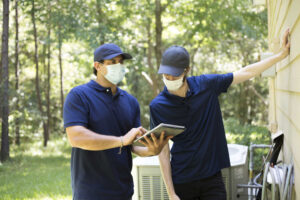
Tell us the kind of wasp, where the nest is and roughly how big it looks.
Get Matched With A Local Pro
We match you with a licensed company near you that handles stinging insects.
Book Your Treatment
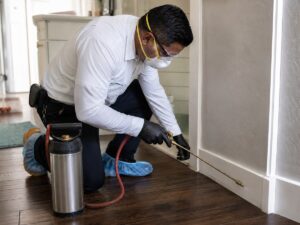
The tech treats the nest on a day that suits you, and you only pay if you book.
Wasp and Hornet Control FAQs
Got a wasp or hornet question we missed? Send it through the form with a photo of the nest from a safe distance.
Should I plug a wasp nest hole in my wall?
No. Blocking the entrance traps hundreds of yellow jackets inside, and they chew a new exit, sometimes through the drywall into a bedroom.
Treat the colony first with dust in the opening, wait until traffic stops, then seal it. A wall nest job runs $500 to $1,000.
How do I tell honey bees from wasps?
Honey bees are fuzzy, golden brown and carry pollen on flat hind legs. Wasps are smooth, shiny and brightly banded.
Bees matter because they pollinate, so a beekeeper or bee removal company can relocate them alive. That costs $125 to $1,000, depending on how established the colony is.
Are Africanized bees dangerous?
Africanized honey bees look like regular honey bees but defend their colony with far more bees over a much longer distance. They live in Arizona, Texas, Southern California and Florida.
Never treat a bee colony yourself in those states. If they chase you, run for a car or building and don’t stop to swat.
Is it better to remove a wasp nest at night?
Yes. The whole colony is home after dark, and cool temperatures slow the wasps down, so fewer escape to sting.
Use a red light, since a white flashlight draws them straight at you. Night DIY works for small paper wasp nests, not for nests in walls.
Do wasps come back to the same nest?
Rarely. Paper wasp and yellow jacket colonies die off in winter, and only new queens survive to start fresh nests in spring.
Old nests break down over winter, but the same eave or wall gap can draw a new queen, so seal empty entry holes once the colony dies.
Get a Free Wasp Nest Removal Quote
Fill out the form with the nest location and your ZIP. A licensed stinging insect company near you sends a price, and you’re free to turn it down.
Along with wasp and hornet work, the companies we match you with handle Mosquito Control, Spider Control and Stink Bug Control, plus every other pest control service we list.